

Actions Taken
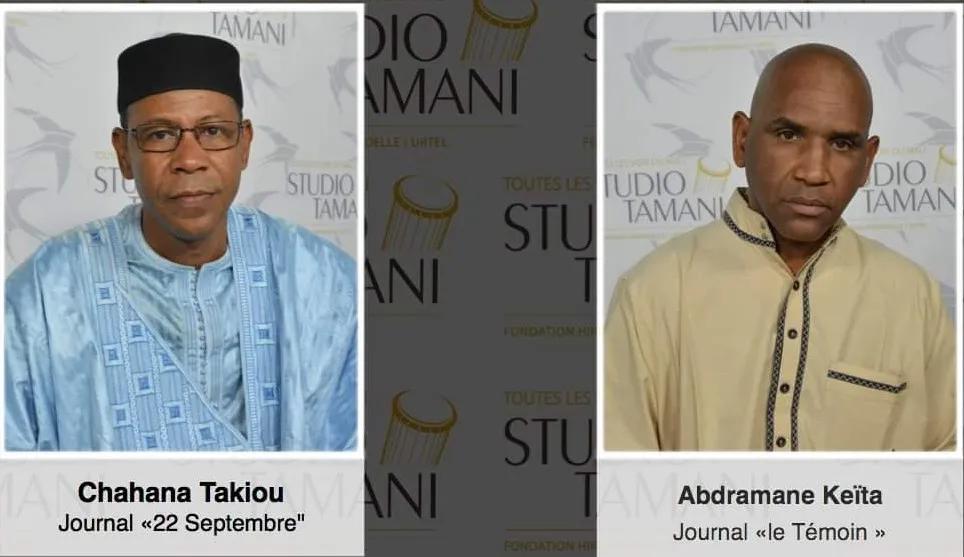
CHAHANA TAKIOU
On 3 August 2026, the National Cybercrime Unit in Bamako sentenced the Malian journalist Chahana Takiou, editor-in-chief of the bi-weekly newspaper Le 22 Septembre, to twelve months’ imprisonment, six months to be served and six months suspended, along with a fine of 500,000 FCFA. He was prosecuted for “undermining the State’s credibility through the judicial system”, after criticising, at the Pan-African Media Forum held in Bamako in early June 2026, the use of the cybercrime law rather than the press offences regime to try a fellow journalist.
Placed under a remand order on 8 June 2026, he spent nearly two months in pre-trial detention ahead of his trial, despite a request for provisional release on health grounds being rejected by the public prosecutor’s office. The journalist decided not to appeal against this decision to the Court of Appeal, the court of second instance. His release, following the completion of his custodial sentence, is due to take place on 8 December 2026, unless a presidential pardon is granted before that date.
Reporters Without Borders has condemned an arbitrary detention that forms part of a continuing deterioration in the conditions under which the press operates during the current transition. The Malian Press Association has stated that these proceedings tarnish the image of the judiciary, the press and the country. This condemnation is the latest in a series of prosecutions targeting Malian journalists and reinforces concerns that cybercrime legislation is being used to restrict press freedom and pluralism in public debate in Mali.
ABDRAHAMANE KEITA
The court specializing in combating cybercrime delivered its verdict on Monday, September 14, 2026, in the case between journalist Abdrahamane Keïta and the justice system. The editor of the newspaper Le Témoin, Keïta was found guilty of the charges against him and sentenced to two years in prison.
In addition to this sentence, the court ordered Abdrahamane Keïta to pay one million CFA francs in damages to the plaintiff. The defense, which is contesting the decision, plans to appeal. The journalist had been detained since last June. He was being prosecuted, in particular, for regionalist activities likely to damage the reputation of the state and national unity, as well as for disseminating false information through an information system. The case stems from remarks made on June 4, 2026, during the program "Le Grand Jury," broadcast on Renouveau TV. The program, hosted by Abdrahamane Keïta and his colleague Chahana Takiou, featured Mohamed Ousmane Ag Mohamedoun Haidara, a member of the National Transitional Council (CNT) and a proponent of the "Assimism" movement, as a guest.
During the broadcast, the discussions focused on the record of the Transition and the country's security situation. During the debate, Abdrahamane Keïta questioned his guest about the events of April 25th, asking him if they constituted, in his opinion, "a failure of defensive Assimi." According to the journalist's testimony, his guest did not answer the question directly and instead steered the discussion toward a personal response, stating, among other things: "If Assimi has failed, you will be governed by Iyad Ag Agaly." Abdrahamane Keïta then retorted: "He governs me because he governs my compatriots in Kidal." This statement is central to the legal proceedings against him.
At the hearing, the editor of Le Témoin contested the charges against him. He explained that his statement was intended neither to spread false information nor to present a favorable view of the situation in Kidal. He also maintained that his remarks were made within a specific context, marked, at the time of the events, by the absence of public administration in Kidal. According to the journalist , this statement could not therefore be interpreted as an attempt to harm the interests of the state, especially since, in his view, it had not had any destabilizing effect. During the substantive hearing, however, the prosecution requested a three-year prison sentence, with two years to be served. The prosecution argued that the charges against the journalist justified criminal punishment in light of the evidence presented during the proceedings.
After nearly three months in pretrial detention, Abdrahamane Keïta now knows the court 's decision . The defense is expected to appeal to the appropriate court to contest this conviction.